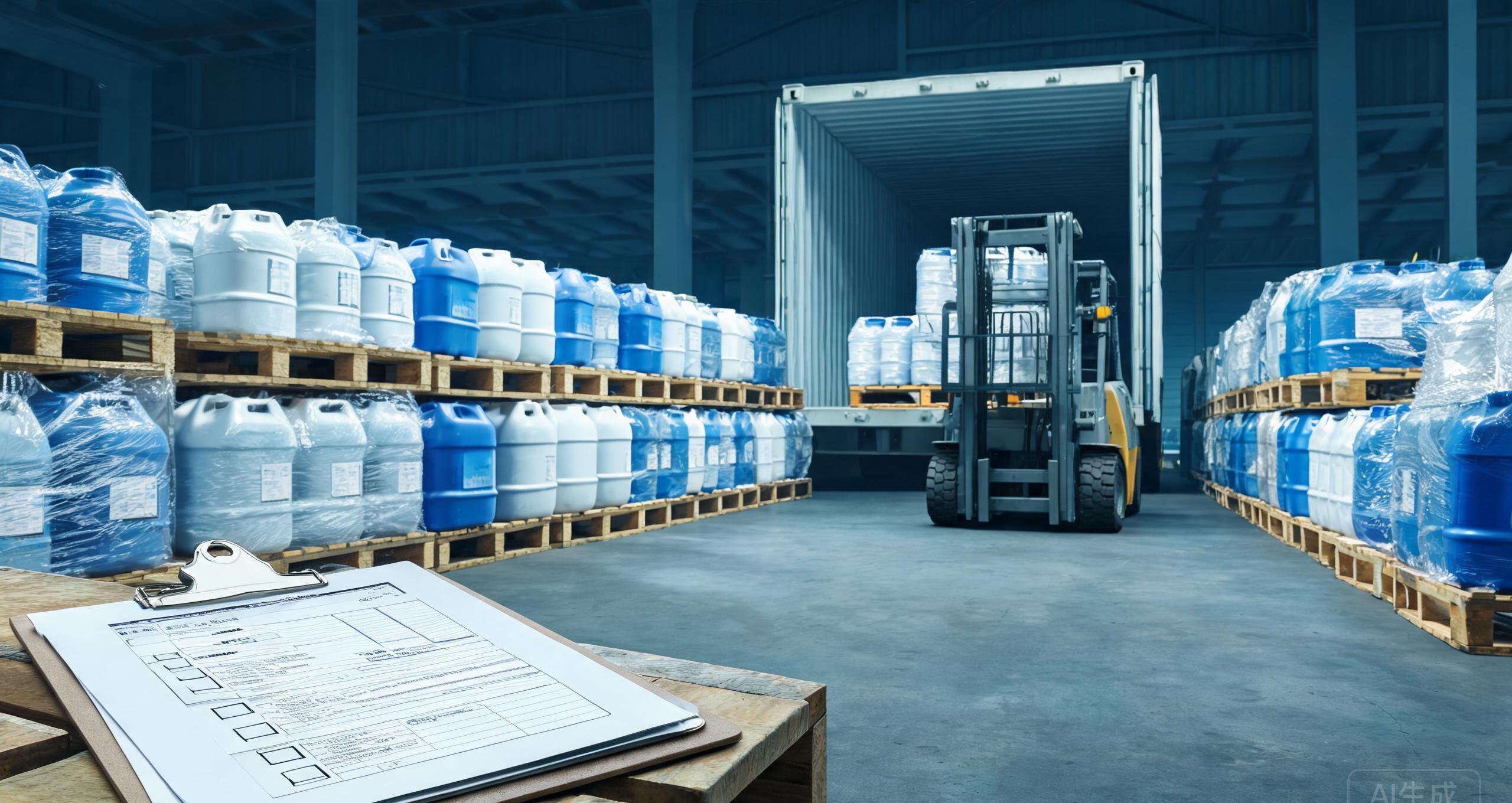
Cleaning chemicals are one of the most import-friendly product categories from China: stable demand, good margins on concentrates, and year-round repeat orders. But the first order trips up many new importers — usually not on price, but on documents, dangerous goods shipping and packaging details.
Use this checklist to keep your first (and every) container smooth and compliant.
☑ 1. Lock the Product Specification Before Pricing
"Toilet cleaner" or "disinfectant" is not a spec. Before comparing prices, define:
- Active ingredient and concentration (e.g. available chlorine %, acid content)
- Appearance, fragrance, viscosity requirements for your market
- Ready-to-use vs. concentrate, with target dilution ratio
- Shelf life required on arrival
Two quotes are only comparable when the spec is identical.
☑ 2. Confirm Dangerous Goods (DG) Status Early
Many cleaning chemicals — chlorine disinfectants, acid cleaners, rust removers — ship as Class 8 corrosive cargo. This affects freight cost, carrier selection and packaging. Ask your supplier:
- UN number and packing group for each product
- Whether they handle DG declaration in-house
- DG surcharge and which Chinese ports they ship DG cargo from
A factory experienced in DG export saves you weeks of back-and-forth with forwarders.
☑ 3. Collect the Document Set
For customs clearance and your own compliance file, collect:
- MSDS/SDS (English, GHS format)
- COA for the shipped batch
- Commercial invoice & packing list
- Certificate of Origin (CO / Form A / RCEP as applicable to your tariff)
- Bill of lading with correct consignee and notify party
- Any local registration your market requires for disinfectants or biocidal products
☑ 4. Specify Packaging Like an Engineer
Leaking drums and collapsed cartons are the most common first-order disasters. Spell out:
- Container type: HDPE bottles, jerry cans, 25KG drums, IBC tanks
- UN-rated packaging for DG cargo — mandatory, not optional
- Cap sealing: induction seal + tamper ring for liquids
- Palletization: pallet size, shrink wrap, corner protectors, max stack height
- Label language and hazard pictograms required in your country
☑ 5. Choose the Right Incoterm
- EXW — you control everything; only if you have a strong China-side agent
- FOB — the sweet spot for most buyers; factory handles export clearance and DG declaration, you book freight
- CIF/CFR — convenient for first orders, but compare the factory's freight rate with your forwarder's
☑ 6. Agree on Payment Terms You Can Both Live With
The industry standard for new relationships is 30% deposit, 70% against copy of B/L. As trust builds, many factories accept more flexible terms. Be cautious of 100% upfront requests — and equally, understand that factories rarely give open account terms on a first order.
☑ 7. Inspect Before the Container Leaves
Options, from cheap to thorough:
- Live video inspection of your goods being filled and loaded
- Photos of batch numbers, labels, pallets and container seal
- Third-party inspection (SGS, BV, Intertek) for large orders — usually a few hundred dollars, worth it for a first container
☑ 8. Plan for Reorder Consistency
Your second order matters more than your first. Fix the approved sample as the quality benchmark, keep the batch COA on file, and confirm the factory locks your formula and packaging spec in writing. Repeat customers should get repeat product — not "similar" product.
Start with a Factory That Exports Every Week
Wolaimu Biotechnology manufactures disinfectants, rust removers, toilet cleaners and floor care products in Dezhou, Shandong, and ships to buyers in 50+ countries. We handle DG declaration, provide MSDS/COA/CO with every order, support OEM labeling, and quote within 24 hours. Browse our product range or send us your requirement — we'll reply with pricing, loading details and document samples.