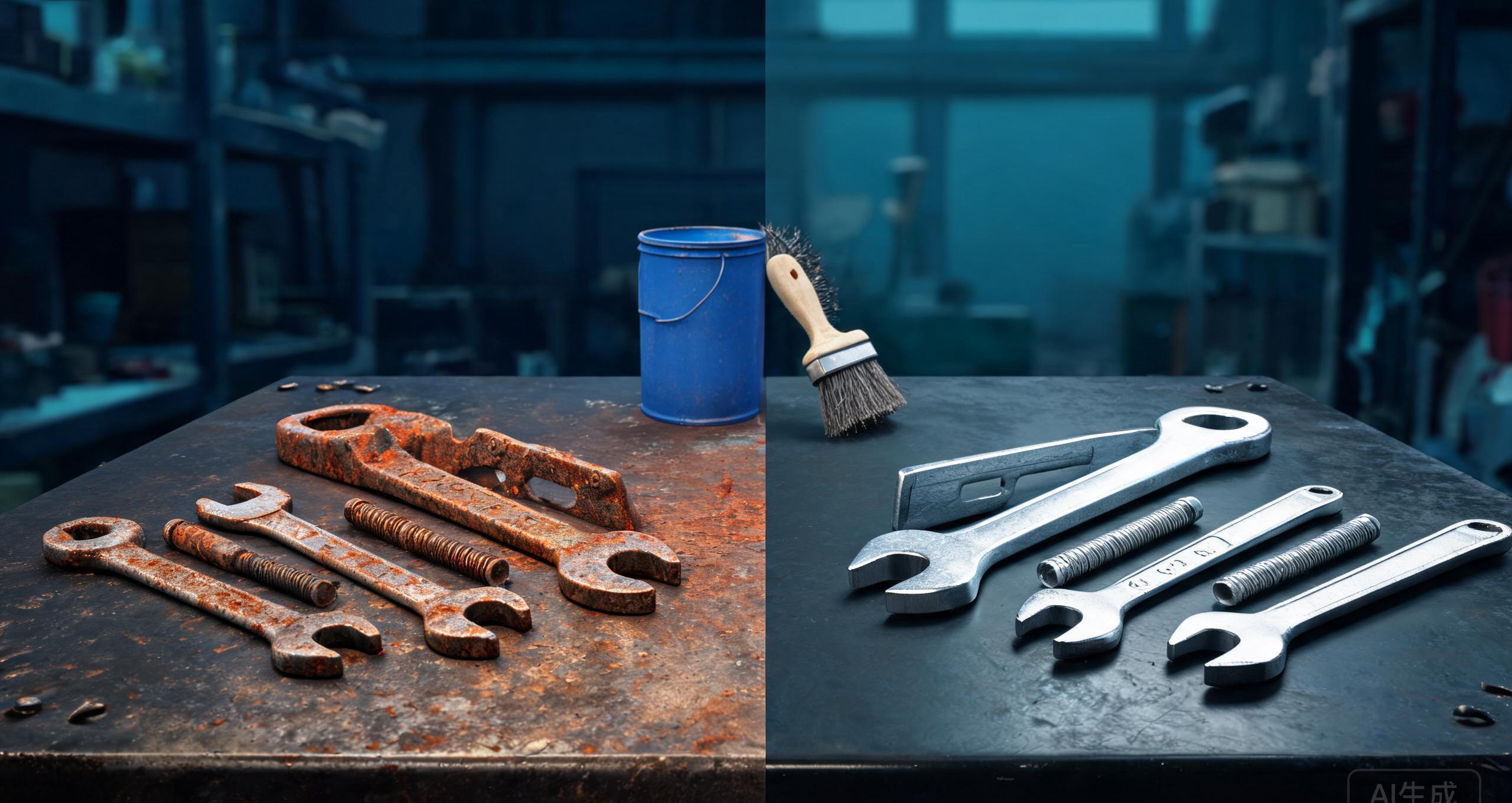
Rust remover looks like a simple product — until your customers complain that it etched their chrome, failed on heavy scale, or corroded the wrong metal. Whether you import for hardware stores, industrial maintenance or automotive channels, choosing the right formula and the right supplier determines your repeat purchase rate.
This guide breaks down the decisions that matter when buying rust remover in bulk.
Step 1: Choose the Formula Type for Your Market
Most rust removers fall into two families:
| Type | How it works | Best for | Caution |
|---|---|---|---|
| Acid-based (phosphoric, oxalic or blended acids) | Dissolves iron oxide quickly; phosphoric acid also leaves a light conversion coating | Heavy rust on steel, tools, machinery, concrete rust stains | Can etch chrome, aluminum and marble; needs rinsing and PPE |
| Neutral / chelating | Chelating agents bind iron ions without strong acidity | Delicate parts, chrome-plated items, household use, soak applications | Slower on heavy rust; higher cost per treatment |
For most B2B buyers serving maintenance and hardware channels, a fast-acting acid-based remover is the volume seller, while a gentler formula covers household and retail shelves. Many importers carry both.
Step 2: Check Surface Compatibility Claims
A trustworthy supplier states clearly which surfaces are safe and which are not. For acid-based removers, the standard guidance is:
- Safe: carbon steel, cast iron, most tools and machinery parts
- Use with care / spot test: stainless steel, galvanized surfaces, painted metal
- Avoid: marble, terrazzo, aluminum alloys and chrome unless the formula specifically allows it
If a supplier claims "safe on everything", treat it as a red flag — real chemistry has limits.
Step 3: Understand Concentration and Dilution
Concentrated removers are diluted before use, which dramatically lowers your shipping cost per liter of working solution. Ask the factory:
- Is the product ready-to-use or concentrate?
- Recommended dilution ratio for light rust vs. heavy rust (e.g. 1:1 up to 1:5 with water)
- Contact time — professional formulas act within minutes, not hours
Step 4: Match Packaging to the Sales Channel
- Retail / household: 500ml–1L trigger spray or squeeze bottles with your private label
- Workshop / janitorial: 3.8L–5L jerry cans
- Industrial & re-packing: 20L pails or 25KG drums
Buying drums and re-packing locally gives the best margin, but requires local filling capability. If you don't have it, order retail-ready packaging from the factory instead.
Step 5: Verify Safety and Export Documents
Acid-based rust removers are typically classified as Class 8 corrosive goods for sea freight. Your supplier must handle DG declaration and provide:
- English MSDS/SDS with correct UN number and packing group
- COA per batch
- Proper UN-rated packaging and hazard labels on drums
- Certificate of Origin where your tariff agreement requires it
Step 6: Run a Sample Test Before the Bulk Order
Nothing replaces a bench test. Take rusted samples from your target market — rebar, tools, bolts, a chrome fitting — and evaluate:
- Speed: visible rust lifting within the claimed contact time
- Completeness: no shadow stains left after rinsing
- Base metal protection: no obvious attack on sound metal after the rust is gone
- Residue: easy rinsing, no sticky film
Factory-Direct Supply from Wolaimu
Our Powerful Rust Remover is a fast-acting formula supplied in 25KG drums and custom packaging, with OEM labeling and full export documents (MSDS, COA, ISO). We manufacture in-house, so batch quality stays consistent across your repeat orders. Contact us for samples and a 24-hour quotation.